
Is an Airbnb in Margarita worth it? The real numbers on vacation rentals
By HabitaOne Team
Search Google for "airbnb margarita venezuela" and a thousand apartments pop up, each one ready for you to book. What never pops up, no matter how far you scroll, is the question that matters if your goal is to buy rather than rent: is it worth putting a beachfront apartment to work? Nobody answers that with numbers. We will, and we'll be honest about what we know and what we don't.
A confession first, the kind no salesperson makes: we don't have the per-night rate an Airbnb charges on the beach either. That data doesn't exist publicly or reliably in Venezuela. What we do have are the purchase and traditional-rent prices from thousands of active listings, and those let you reason through the decision far better than a made-up promise of returns.
Margarita vs Lechería: two coasts, two audiences
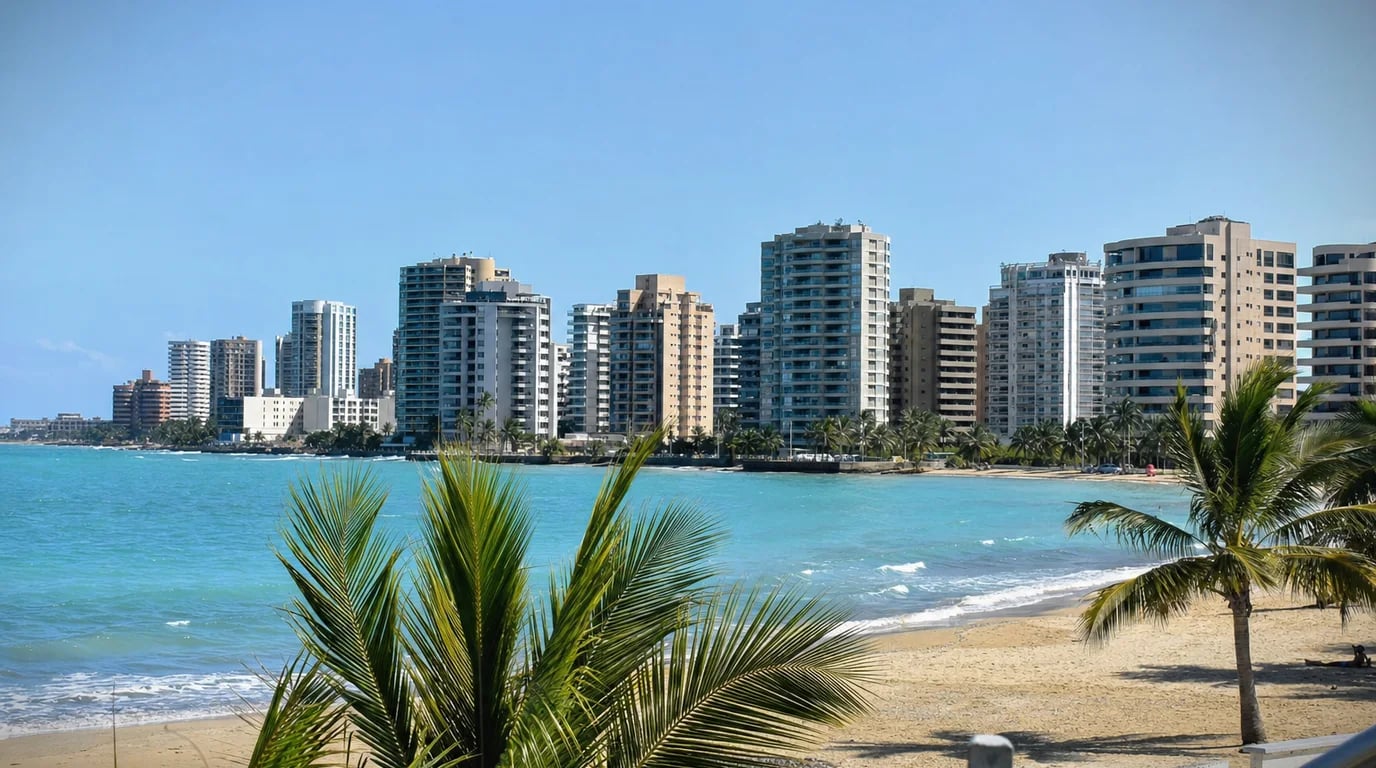
Margarita and Lechería aren't the same thing, even if both are "the beach." Margarita is the island, the Pearl of the Caribbean that Venezuelans fly or ferry to on vacation, with a sharp high season and visitors arriving from all over the country. Lechería is mainland coast in Anzoátegui, more urban, more of a weekend spot for people who live an hour or two away, with a residential profile mixed in with the tourism.
That difference in audience drives the type of business. In Margarita you compete with hotels and hundreds of vacation apartments for the seasonal tourist. In Lechería your tenant could be the weekend visitor or a family staying for months. Before you look at a single price, decide who you're renting to, because it isn't the same property or the same spreadsheet.

What it costs to get in
Buying on the coast isn't cheap. According to HabitaOne listings, the typical apartment in Lechería asks 1,435 USD/m², and in Margarita 967 USD/m². For reference, the typical Caracas apartment asks 1,285 USD/m². You read that right: a square meter in Lechería trades above the capital's.
967USD/m²
Margarita apartment (purchase)
1,435USD/m²
Lechería apartment (purchase)
1,107USD/m²
Lechería, all property types
1,285USD/m²
Caracas apartment (reference)
Across all property types, Lechería's median lands at 1,107 USD/m², the same number you'll see on our Lechería price page. Margarita comes out cheaper than Lechería on apartments, but it's still one of the priciest coasts in the country. Entry costs a lot, and that weighs on any math you run afterward.

Vacation vs traditional: how they really compare
This is where the question "is it worth it?" earns its keep. Look at the traditional rental, the fixed year-round tenant. In Lechería, an apartment rents for around 585 USD a month according to HabitaOne listings. In Caracas, that same typical apartment rents for about 1,200 a month. You paid more per square meter on the coast, and it rents for less than half what the capital does.
On the coast you pay more per square meter than in Caracas, but the traditional rental brings in less than half. Everything that justifies buying there sits in the seasonal premium, which is exactly what we can't measure.
That's the catch. As a long-term rental, the coast performs weakly, because rent doesn't keep pace with the purchase price. Run the simple math and Lechería comes in around 8.7% gross annual yield across all property types, with the net knocking off two or three points for HOA fees, maintenance, and vacancy. Not terrible, but not why people buy on the beach.

So where does the business come from? The vacation premium. In high season a night at the beach goes for far more than the prorated share of a monthly rent, and occupancy spikes: Margarita opens the holiday weekends with hotels nearly full and beachfront stays brushing capacity. That's the upside. But the upside depends on the season, the area, and the management, and we have no per-night rate data to put a number on it. Anyone selling you an exact vacation-yield percentage is guessing. The full logic of gross, net, and by-area yield lives in our guide to rental yield by area.
What nobody tells you about running a vacation rental here
An Airbnb isn't a property that rents itself. It's an operating business, and in Venezuela it has its own rough edges. Demand is seasonal and concentrated: you earn big over Holy Week, Carnival, August, and Christmas, and the rest of the year the apartment can sit empty for weeks. Your real return isn't the rate from one fully booked weekend. It's the average across the whole year, gaps included.
Seasonality is the biggest risk
The classic mistake is projecting the income of one high-season weekend as if it were every weekend. It isn't. Margarita's occupancy spikes over the holiday weekends and drops sharply outside them. Calculate with the low season included, not with the snapshot of a full house.
Then there's the usual coastal headache: water and power. An apartment that runs out of water in high season, or has no generator when the power goes, doesn't get a second booking. It gets a bad review. The operation also means cleaning between guests, hosting, repairs, and someone you trust on-site if you don't live there. All of it eats into the gross return. The traditional rental is boring but passive; the vacation rental yields more gross, but it's a job.
One note on method for Margarita's traditional rent: our sample of apartments for rent there is thin (around 28 listings), so treat that figure as indicative, not a headline. It's another sign that the island's market moves more on the vacation side than on the fixed tenant.

Who it's for and who it isn't
A coastal vacation rental makes sense if you'll use the property yourself (vacation there, put it to work when you're away), if you have someone you trust to operate it, and if you go in expecting seasonal income rather than steady rent year-round. For that profile, the seasonal premium plus your own enjoyment make up for the costly entry.
It makes less sense if what you want is passive, predictable income. For that, a traditional apartment in a city with fixed-tenant demand gives you fewer headaches, even if the postcard is less pretty. If your goal is purely the number, compare the coast against other markets before deciding; you'll find that in the home-price-by-city guide.
And if you've already decided the coast is your thing, the next step is real inventory: browse apartments for sale in Margarita and Lechería, run the math with real numbers, and go in knowing what you know and what you don't. That honesty ends up being the best investment.
Fuentes
- Banca y Negocios —
Margarita is the top beach destination sought by Venezuelans and its tourist demand is markedly seasonal: hotel occupancy spikes over the holiday weekends, and beachfront stays brush capacity in high season.
- Radio Nacional de Venezuela —
Margarita is a benchmark tourist destination in Venezuela and the Caribbean, with demand concentrated in holiday periods such as Holy Week.