
Rental yield in Venezuela: how to calculate yield by area
By HabitaOne Team
When someone tells you an apartment "yields 12%," they are handing you the end of a calculation without showing you the two numbers that produce it. That 12% is the ratio between what you collect in rent over a year and what you paid for the property. Once you know those two numbers, you can rebuild the math for any area and stop depending on what a seller tells you.
This guide uses medians from HabitaOne's active dollar listings (June 2026), the same data that feeds our price-per-m² pages. The method is simple: divide two medians that are already published.
What gross yield is and how to calculate it
Gross yield is the annual return on a rental before expenses, expressed as a percentage of the purchase price. It measures how much the capital tied up in the property earns, before you account for vacancy, fees, or repairs.
The formula starting from price per m²
Working with the price per square meter saves you from comparing properties of different sizes. The formula is direct:
gross yield = (rent USD/m²/month x 12) / (sale price USD/m²)
The numerator is what one square meter produces over a year of rent. The denominator is what it costs to buy that square meter. The division tells you what fraction of the price you recover each year through rent.
A step-by-step example: Caracas
In the Distrito Capital, HabitaOne's active listings give a median rent of 11 USD/m² per month and a median sale price of 1,091 USD/m². The math:
- 11 x 12 = 132 USD/m² per year.
- 132 / 1,091 = 12.1%.
1,091USD/m²
Median sale, Caracas
11USD/m²/mo
Median rent, Caracas
12.1%
Resulting gross yield
225,000USD
Typical apartment, Caracas
Those two numbers come from HabitaOne's active listings, and on the Caracas price-per-m² page you can see the area's median sale and rent. The pages round to whole dollars, so the calculation you redo on what shows on screen gives you the same number. The method is always the same: arithmetic on the published median.
What each city yields (Jun 2026)
These are the median sale and rent prices by city and the gross yield you get from dividing them. All are medians from HabitaOne's active dollar listings.
- Caracas (Distrito Capital): sale 1,091 USD/m², rent 11 USD/m²/month, gross yield 12.1%.
- Maracaibo (Zulia): sale 498 USD/m², rent 5 USD/m²/month, gross yield 12.0%.
- Maracay (Aragua): sale 506 USD/m², rent 5 USD/m²/month, gross yield 11.9%.
- Barquisimeto (Lara): sale 565 USD/m², rent 5 USD/m²/month, gross yield 10.6%.
- Valencia (Carabobo): sale 686 USD/m², rent 6 USD/m²/month, gross yield 10.5%.
- Lechería (Anzoátegui): sale 1,107 USD/m², rent 8 USD/m²/month, gross yield 8.7%.
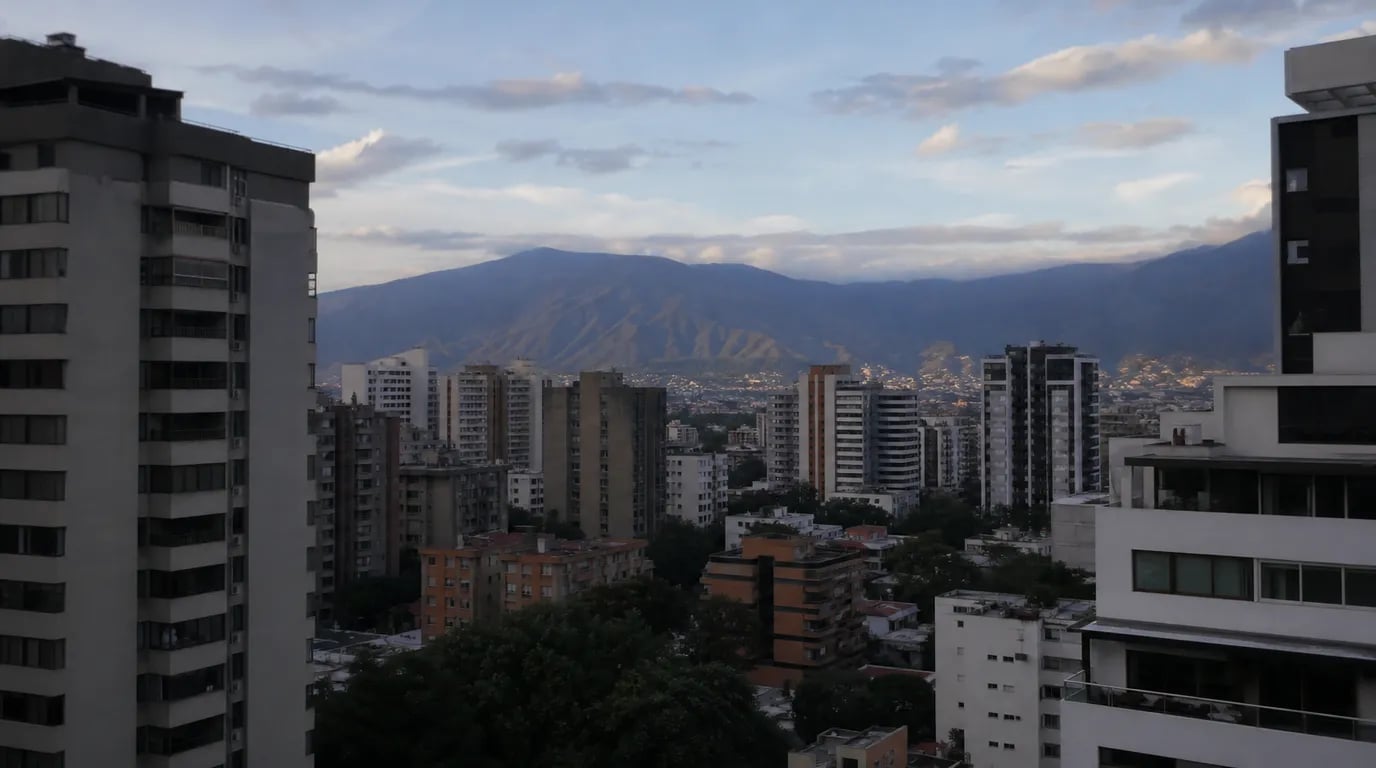
The first thing that stands out is that the top three cities are tied in practice. Caracas, Maracaibo, and Maracay all land near 12%, and the gap between 12.1% and 11.9% is not a real ranking. Valencia and Barquisimeto sit around 10.5%, and Lechería is clearly the lowest, at 8.7%. Within Caracas, areas like Chacao and the east are asked above the city median, so their yield shifts from the number above. You can check the price per m² for any area in our price-per-m² search.
One warning about these numbers: the page rounds rent to whole dollars, so a city that shows up at 5 may be a little above or below that 5 in the real median, and at that level a small change moves the yield by more than a point. That is why sub-one-point differences between cities fall inside the noise of rounding and sample size. There is no point reading too much into them, especially in the lead group, where three cities sit within two tenths of each other.
Why a cheaper city does not yield more
Intuition says buying cheap yields more. The data says otherwise.
Yield is a ratio, not a price
Maracay is the cheapest city on the list, at 506 USD/m², and yields close to 12%. That seems to confirm the intuition. But Lechería is among the most expensive, at 1,107 USD/m², and yields the least of all, 8.7%. The absolute price level does not predict the return. A cheap city where rents are also cheap yields the same or less than an expensive one where rent keeps pace with the sale price.
What governs is not how cheaply you buy, but the ratio between what you collect in rent and what you paid for the meter.
The contrast sharpens if you look at Caracas and Lechería, which cost almost the same per square meter (1,091 and 1,107) and still yield 12.1% and 8.7%. Same price level, almost three and a half points of difference in the return. This happens when an area gains prestige: the purchase price rises faster than what a tenant is willing to pay in rent, and that gap between what you pay for the meter and what it yields is exactly what pulls the yield down. That is why Maracay, cheap and with rents that keep pace, ends up yielding more than Lechería, expensive and with rent that does not follow the sale price.
Why Venezuela yields close to 9% to 12%
A gross yield near 9% to 12% is high by any international standard, where residential markets with mortgage credit usually sit lower. It is worth understanding where that gap comes from before reading it as a bargain.
A cash market, with no mortgage credit
There is no working mortgage market in Venezuela: residential property is bought almost entirely in cash and in dollars, with no bank financing in between. That is a central driver of the high yield. Without credit, purchase demand is limited to people who have the full capital on hand, which pushes sale prices down compared with markets that have mortgages. At the same time, many people who cannot buy in cash rent instead, which sustains rental demand. Contained sale prices plus firm rents produce high yields.
That excess return can be read as a risk premium: compensation to the investor for illiquidity (selling takes time when the pool of buyers is limited to those who pay cash) and for country risk. It is no invention of ours that Venezuela is a high-risk economy. Its GDP contracted close to three quarters between 2014 and 2021, it went through hyperinflation that reached around 130,000% in 2018, and in 2026 the IMF still describes its situation as "quite fragile," with three-digit inflation and a currency that is depreciating sharply. Against that backdrop, a return above the international standard is the flip side of a risk that is also above the standard.
Since there is no debt involved, the return is not leveraged either. In a market with mortgages, the investor earns the spread between the yield and the cost of the loan. Here the yield is the full return on your capital.
The honest limits of this number
Gross yield is a good starting point and a bad finishing point. Three clarifications change how you read it.
Gross vs net: what is left to subtract
From gross yield you have to subtract vacancy (months without a tenant), management or administration fees, major repairs, and the drag of the first year from acquisition costs. Among those costs are notary fees, recording with the Registro Público (the public registry), and the lien certificate, which is requested close to the deal because it has limited validity. These costs tend to vary, so it is worth getting quotes before you close. All of it eats into the first-year return.

One nuance that works in the owner's favor: in a rental, the tenant usually pays the ordinary condominium fees (cleaning, elevator, doorman), so that cost does not come out of the owner's yield. What does stay on the owner's side is major repairs, vacancy, and management. As a practical rule, subtract about 2 to 3 points from the gross yield to reach a realistic net. A 12.1% gross in Caracas lands closer to a 9% to 10% net.
On vacancy there is a point that changes the math in Venezuela. The dominant risk is not the month without a tenant, but the tenant who stops paying and turns out to be hard to evict through the legal system.
A tenant who does not pay is protected by law
Decree No. 8,190, the Law Against Arbitrary Eviction and Repossession of Housing, protects tenants and occupants from administrative or judicial measures that would interrupt their legitimate possession of the home. Recovering a property from a delinquent tenant through the legal system is slow and restricted. That is why many owners demand high deposits, dollar contracts, or firm guarantees before handing over the keys, and why this guide is informational and does not replace the advice of a Venezuelan lawyer you trust.
Asking prices vs closing prices
The medians we use are asking prices, what gets published, not closing prices. In a cash market the buyer usually negotiates the list price down. If you buy below the asking price, your real yield on what you actually paid goes up. The area benchmark is conservative in that sense.
Sale and rent are two different listing pools
This is the main caveat. The yield divides the median rent of one set of properties by the median sale price of a different set. They are not the same properties.
It is an area benchmark, not a property
Yield by area works for comparing neighborhoods and cities against each other, not for guaranteeing what the specific apartment you are looking at will yield. You only know that number from the real rent and the real price of that unit.
How to estimate the yield of a specific area with HabitaOne
With the formula and our price pages you can calculate the yield of any area in four steps.
- Look up the sale price per m² for the area in the price-per-m² search.
- Look up the rent per m²/month for the same area.
- Multiply the rent by 12 and divide by the sale price. That is your gross yield.
- Subtract about 2 to 3 points for expenses to reach a rough net. It is a range, not a promise.

To size up how much cash you need upfront, look at the median total price of an apartment in the average prices by city: it runs around 225,000 USD in Caracas, 150,000 USD in Lechería, 120,000 USD in Maracay, 108,000 USD in Valencia, 90,000 USD in Barquisimeto, and 85,000 USD in Maracaibo. That page reinforces this guide's thesis: a higher total price does not mean a higher yield. Watch one thing: that median total price covers apartments of all sizes and comes from a different listing pool than the median per m², so you do not divide one by the other to back out square meters. They are two separate references. In a cash market, that total price is the ticket you need available in full.
Once you know the area's yield, the next step is to see what is actually being rented there to confirm your rent estimate survives contact with the real market. Look at what is being rented in each area and compare the published rents with the number you used in the math. If they match, your estimate is solid. If the real rent is lower than you assumed, adjust the yield down before you buy.
Before you move the money
If you are still not clear on how a cash purchase closes in Venezuela, review how to buy in dollars step by step: which documents to demand, how to verify the seller, and the exact moment you become the owner.
Sources
- AFP, via Digital Journal —
Venezuela has no working mortgage market, and residential property is bought almost entirely in cash and in dollars, the only accepted means of payment in real estate transactions.
- Council on Foreign Relations —
Country-risk context: GDP contracted close to three quarters between 2014 and 2021, and inflation reached around 130,000% in 2018.
- Al Jazeera (IMF assessment) —
In 2026 the IMF describes Venezuela's economic situation as "quite fragile," with three-digit inflation and a currency that is depreciating sharply.
- National Assembly of Venezuela —
Decree No. 8,190 protects tenants and occupants from measures that would interrupt their legitimate possession of the home, which makes recovering a property from a delinquent tenant slow and restricted.