
14 tips to sell your house fast (and for more) in Venezuela
By HabitaOne Team
When a property sits listed for months and nothing happens, it's almost never the market's fault. It's the price, or it's the photos. And it usually shows in the very first image. The tips below aren't agency tricks or magic promises: they're what moves the needle in a cash-and-dollars market, where the buyer shows up with the money in hand and compares your house against twenty others the same day.
the same bedroom, two different listings
 Before
At night, one ceiling bulb and the phone's flash, the wardrobe open and stuff all over the floor.
 After
AfterCurtains open, bed made, wardrobe closed, floor clear. Half an hour of work and a 10 a.m. photo.
It's the same room. In the first one the owner opened the wardrobe, shot at night with the bulb on, and uploaded the photo as it came out. In the second one someone made the bed, closed the wardrobe, opened the curtains and waited until the next morning. No renovation, no new furniture, no paint: half an hour.
And that half hour is what separates a listing a buyer opens from one they scroll past, because in the search results your house competes for a thumbnail against twenty others. The rest of this guide is how to get from the first photo to the second one, and what to do about the price, the description, and the arguments that carry weight here.
price it right from day 1 (mistake #1)
Nothing buries a sale faster than coming out high "to see what happens." Serious buyers see the inflated price, write it off in two seconds, and never call. You drop it later, but by then the listing is burned and the house has a reputation for being overpriced.
1. Measure your price against your city's real median, not against what you feel it's worth. In Caracas the median sale price runs around 1,091 USD/m² based on HabitaOne listings; in Valencia 686, in Maracay 506, in Maracaibo 495. Divide the total by the square meters to get your price per meter, then compare it against the average price in your area. If you're well above without a clear reason, that's your first adjustment.
2. A cash price, with no cushion for absurd haggling. People here buy in cash and in dollars, so the buyer always negotiates down. A 5 to 10% margin to close is healthy. Inflating it 30% "because I'll drop it later" only drives away the person who was ready to sign.
3. An honest price puts you next to your direct competitors. An apartment priced well within its range shows up in the search alongside the comparable ones. If yours comes out 40% pricier than similar neighbors, the buyer assumes you don't know what you've got and keeps scrolling.

Pricing high costs you time, not money
Every week your house sits listed without moving works against you. Buyers see the date and think "something's off with it." It's cheaper to come out at the right price on day 1 than to drop it bit by bit over six months.
photos that actually sell (daytime light, no blackout)
The photo is the first visit. A buyer decides while scrolling whether to open your listing or move to the next one, and they decide from the first image. A well-presented house with good photos pulls in more interest and more real visits, according to real estate agents.
4. Shoot in daytime hours, with natural light. Open all the curtains and shoot between 9 and 11 in the morning, or in mid-afternoon. Never at night, and never with a blackout half on. Natural light makes spaces look big and clean; the yellow light of a bulb buries them.
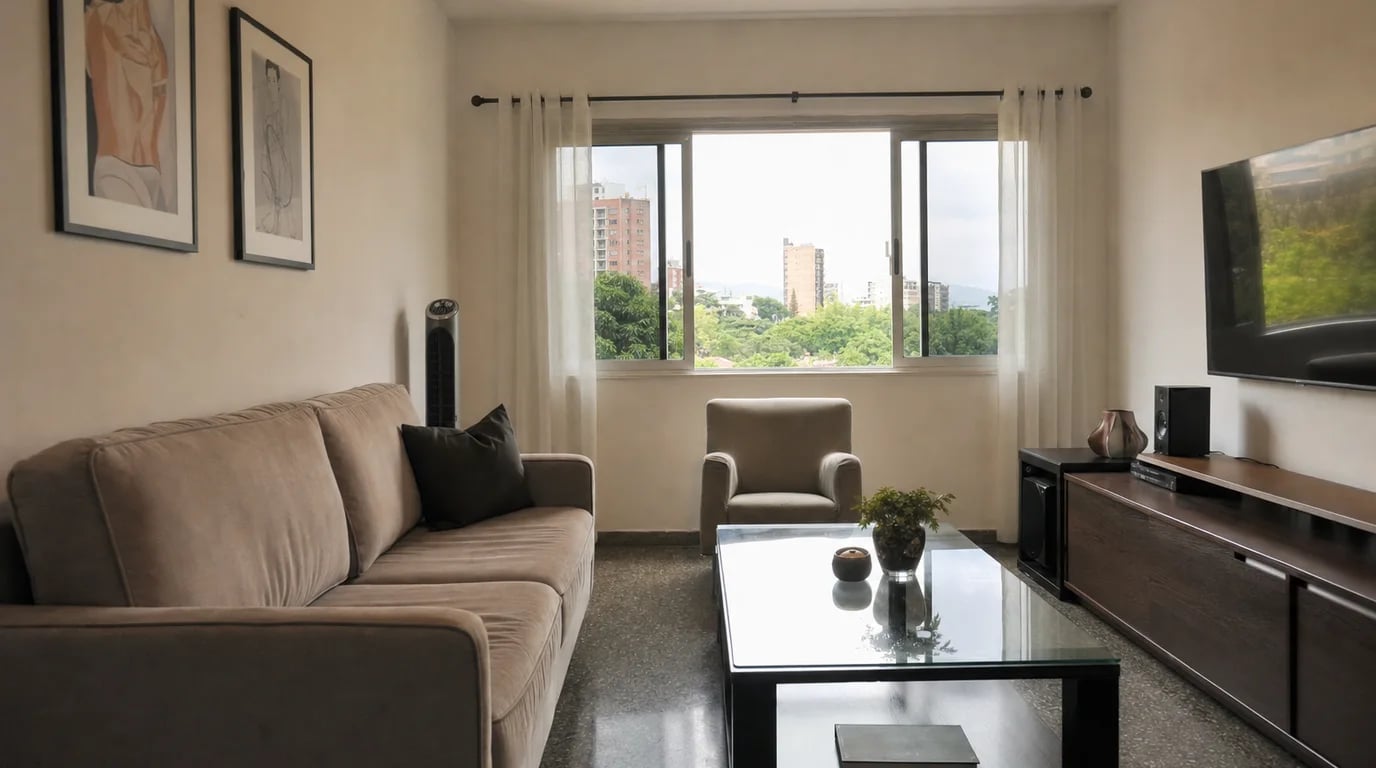
5. Tidy up and clear out before shooting. Empty countertops, made beds, closets shut, no clothes hanging or cables in view. You don't need to move the furniture, you need the photo to show the space and not your stuff. A cleared house looks bigger and better cared for.
6. The order of the photos matters as much as the photos. Lead with the best thing you have (the living room, the view, the balcony), follow with the kitchen and the bedrooms, and leave the laundry room and the storage for last. The first image is what decides whether they open the listing; a closet or a bathroom as the cover sinks the whole thing. Ten good photos in the right order beat thirty mediocre ones.
The photo is the first visit. If the first image doesn’t grab them, there’s no second chance: the buyer has already moved to the next listing.
the Venezuelan arguments: power, water, security
In Venezuela a sale isn't closed by the granite countertop or the marble floors. It's closed by showing the house solves the three things that keep people up at night: power, water, and security. If your property has them, put them up front.
7. The generator or the inverter sell themselves. It's the first thing anyone asks. If you have a generator, an inverter, or solar panels, say it in the title and in the first line of the description, with its capacity. For a lot of people that's the difference between seeing the house or writing it off.
8. The tank, the cistern, and the pump weigh as much as an extra room. Stored water and steady pressure are a huge selling point. Spell out the tank's liters, whether there's a cistern, and whether the pump is a hydropneumatic one. Anyone who's carried water in buckets understands exactly what that's worth.
9. Real security, described in detail. Surveillance, gate, cameras, electric fence, doorman. Don't just say "safe area," say what the building or the neighborhood actually has. Concrete security convinces more than the adjective. To go deeper on how these services get evaluated, the guide on what to check about water and power before buying also works for knowing what to highlight when selling.

clear out and fix the cheap stuff that matters
You don't need to remodel to sell faster. You need to fix what jumps out and quietly drains value. The expensive stuff almost never pays back; the cheap stuff done right does.
10. Repair what's small and visible. A dripping faucet, a door that won't close, a damp stain, a burned-out bulb. They cost little and send the worst message: that the house isn't looked after. The buyer assumes that if you neglected the cheap stuff, you're hiding something expensive.
11. A coat of white paint is the best investment per dollar. Clean, light walls make the house look bigger, newer, and brighter, in person and in the photo. It's the cheap thing that pays off most. Forget the new kitchen: paint, deep-clean, and clear out.
where and how to list
Where you list decides how many people you reach. A well-presented house in the right place sells itself; a good house hidden away gets seen by no one.
12. List where the buyers who compare in dollars are. List your property on a portal where people search by area, price, and square meters, and compare against the real inventory. The more serious eyes that see it, the faster the person looking for exactly yours shows up. If you also want to push it with paid advertising, the guide on how to promote a property explains what that push does and what it doesn't.
13. Write a description that answers before they ask. Square meters, bedrooms, bathrooms, floor, and above all: power, water, and security. A description that already answers what everyone asks filters out the curious and brings you visits that come to close, not to browse.
selling to buy another place (in cash)
Plenty of people don't sell for the cash. They sell to move into another house. And since there's no mortgage credit or bridge loan here to finance the switch, both deals are in cash, and it pays to chain them carefully.
14. Lock down the purchase before you let go of the sale. Have the house you're going to buy identified before you sign on yours, so you don't end up with cash in hand and no roof, or pressured into overpaying for the new one. Put a condition or a reasonable deadline on each deal and leave everything clear in writing. If you're going to negotiate the one you're buying, the guide on how to negotiate and bring down the price of a house saves you several thousand dollars on the other side of the table.

The order that saves you a headache
Chaining two cash sales is a matter of timing. Negotiate deadlines that give you room to move without signing in a rush, and never hand over your house before the other one is secured. A couple of weeks of buffer are worth more than any discount.
Selling fast in Venezuela comes down to three things: coming out at the right price, showing the house as it deserves, and highlighting what matters to the buyer here. All three are within reach the same day you list, and the first photo is the cheapest of them all.
Fuentes
- National Association of Realtors (NAR) —
Preparing and presenting a home well speeds up its sale: nearly half of sellers’ agents observed that staging reduces time on the market.
- Redfin —
Homes with good professional photos sell faster than those listed with improvised photos, which confirms that visual presentation attracts more interest.