How to find an apartment to rent in Caracas: 9 steps to avoid scams
By HabitaOne Team
Renting in Caracas feels less like shopping and more like a hunt. The good, well-located places are gone within hours. The same budget gets you a roomy spot on one side of the city and barely a studio on the other. And among the real listings there is always a fake one slipping through, with gorgeous photos, a price that is too good, and an "owner" who wants you to wire the deposit before you have seen a thing. This guide walks you to a good apartment at a fair price without losing your mind or your money.
first: how much rent costs depending on the area

Before you open a single listing, decide what you can pay per month and compare it against what each area actually charges. That figure swings so hard from one neighborhood to the next that your budget, not your taste, calls the shots.
Monthly apartment rent in the city sits around $1,200 according to HabitaOne listings, but that average hides two different worlds. At the affordable end is El Hatillo, around $750 a month. At the premium end, Las Mercedes climbs to about $2,600 for something comparable. Baruta, Chacao, and Los Palos Grandes fall in between.
Want something cheaper? Look toward the center and the west. La Candelaria and the areas around it usually charge a good deal less than the east. Need to be near the corporate core instead? Chacao and Altamira are the names you will see over and over. Don't fall for an area and then bend the math to fit it; let the budget show you where it actually works.
Add the condo fee, not just the rent
In many Caracas buildings the condo fee covers security, water, and maintenance, and it can weigh heavily on the total. A "cheap" apartment with a high condo fee sometimes ends up costing more than one with slightly higher rent. Compare the full cost, not the headline number.
Walk into every conversation with the data in hand. Take a look at how the prices by area in Caracas move. Knowing the real range for a neighborhood is what separates the person who pays what they are asked from the person who pays what it is worth.
where to search (and where not to)
The gap between a good apartment and a headache almost always starts with where you found it. The platforms that work best have organized listings, real photos, a clear price, and a contact who answers. There you can filter by area and budget, line options up next to each other, and see who is posting. That is how you look for apartments for rent without relying on luck or on the friend who knows someone who knows someone.
Where you really have to keep your eyes open is in loose chat and social-media groups, the ones where anyone posts whatever they want with no filter. A gem shows up sometimes, sure. But the legitimate listings live glued to the fake ones and nobody checks anything. If you use those groups, treat every post as suspicious until the owner proves otherwise: that they will show it to you in person, that they can prove it is theirs or that they manage it, and that they will sign a contract before charging you a single bolívar.
Don't wire a single bolívar, not a single dollar, before you stand inside the apartment and sign the contract. If you can't see it and sign before paying, keep looking.
what to check on the visit: water, power, and security

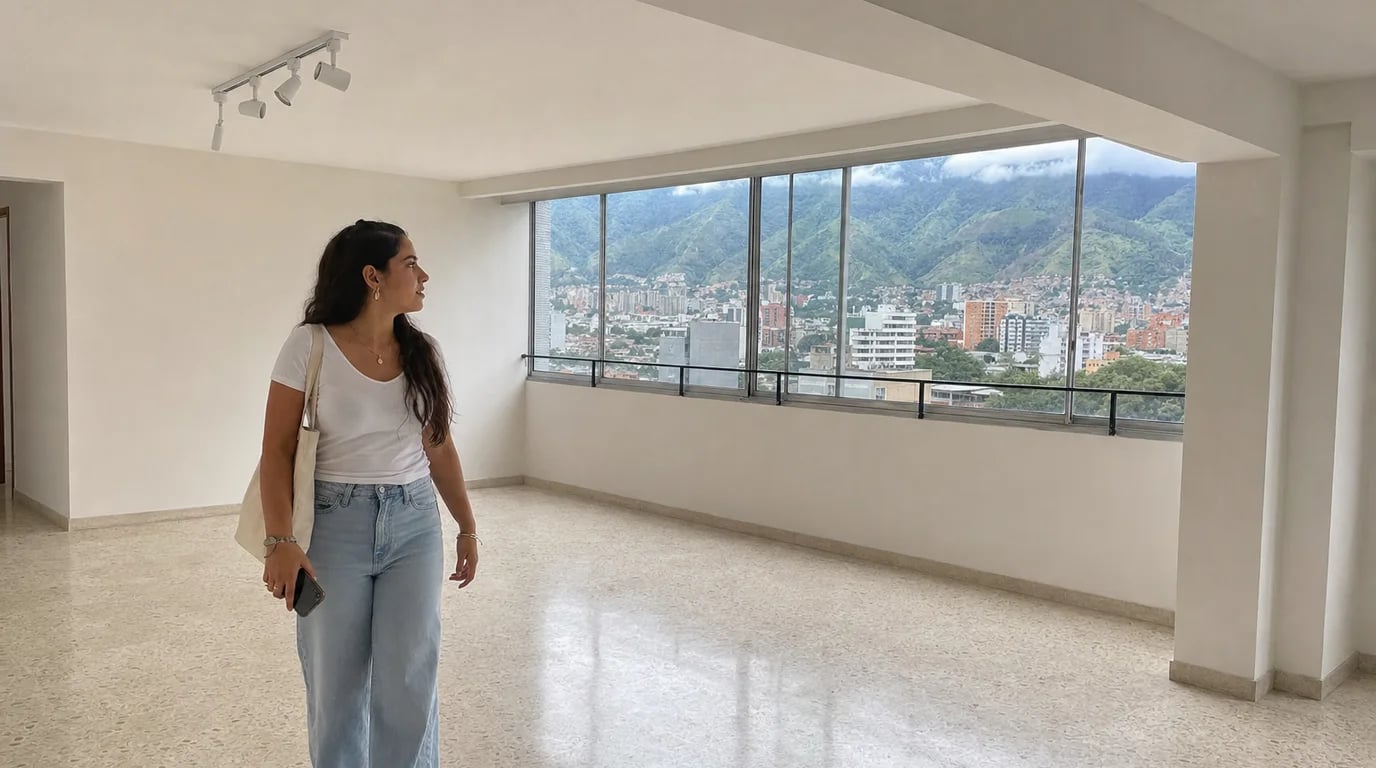
You arrived, the view is great, the floor gleams. That is exactly when people stop looking closely. The visit is for calmly checking the things that are expensive to fix in Caracas and that you will live with every day if they fail.
Start with the water. In many buildings the supply is intermittent, so confirm whether there is a tank or cistern, how the water gets shared among the apartments, and turn on the faucets to feel the pressure for yourself. A building without a good water backup will change your daily life, and not for the better.
Then the power. Blackouts are a recurring, documented reality in Venezuela, so it is worth asking whether the building has a generator, what it keeps running when the power drops (the elevators? the water pumps? your apartment?), and how the fuel cost is split. A generator that actually kicks in is gold in this city.
Check the security like someone who is going to live there, not a tourist passing through. Look for a guard, access control, cameras, and a gate that really closes. The state of the common areas tells its own story; a neglected building usually hides bigger problems. If you can, swing by once during the day and once at night to get a feel for the block at different hours.
Don't sign after a single visit
One quick walk-through won't catch what fails seasonally, like the water pressure at certain hours or how the building behaves when the power goes out. If you can come back at another time, do it. That half hour saves you months of regret.
the 9 scam red flags

These patterns are universal. They show up in any rental market in the world, and Caracas is no exception. The good news is that almost every trap runs the same playbook, so once you learn the signs you see them coming from a mile away.
- They ask you to pay a "deposit" before you see the apartment. Never send money for a property you haven't seen, or to someone you haven't met in person. If they rush you to reserve before the visit, it's a scam.
- They demand payment by methods you can't reverse: cash in hand, crypto, a transfer to a third party or to an account abroad. Pay in a traceable way and only after signing.
- The price is way below market for the area. If an apartment in Chacao or Altamira shows up at half what everyone else is asking, it isn't your lucky day. It's the bait.
- They pressure you to decide "right now." "I have three other people interested; if you don't transfer today, you lose it." That urgency is the scammer's favorite tool for keeping you from thinking. When they rush you, walk away.
- The owner can never show it to you in person. They're always "traveling" or "out of the country," but somehow they can rent it to you just fine if you transfer. No in-person visit, no deal.
- The photos look too magazine-perfect, or they turn up in other listings. Do a reverse image search. If the same shots appear in ten ads or in another city, they were stolen from somewhere.
- They refuse to sign a contract before getting paid. A legitimate owner wants the contract as much as you do. The one who asks for money "to hold it" and signs "later" usually has nothing to sign.
- They ask for a deposit with no receipt and no way to identify themselves. If they give you no proof and you can't verify who is collecting, you have no one to chase when they vanish.
- The whole deal lives in the chat, with no phone number and no verifiable address. A contact who only exists in messages, with no call and no office, is exactly what a scammer needs to disappear without a trace.
If in doubt, don't transfer
No rental opportunity is so good that you skip the visit and the contract. A real apartment is still there tomorrow. If the other party pushes you to pay before seeing and signing, that rush is your answer: thank them and keep looking.
deposit, security deposit, and contract: the right order

Almost every bad experience comes from paying in the wrong order. The order isn't up for negotiation: first you see the apartment in person, then you sign the contract, and only then do you pay.
The contract is your protection, so before you let go of a single dollar, confirm it spells out the basics in plain language: the rent amount and currency, what the condo fee covers, how much the security deposit is and under what conditions it comes back, the term, and how it renews. Standard practice is that the security deposit changes hands at signing, never before, and always with a receipt. If something doesn't add up, run it by a lawyer before you sign, not after. And before you sit down to negotiate, review tenant rights in Venezuela so you know what you can demand and what you can't.
With the budget, the area, and the red flags clear, go browse apartments for rent and walk into every visit with a cool head. That is the whole difference between landing a good apartment at a fair price and learning this the hard way.
Fuentes
- Federal Trade Commission (FTC) —
The rental scam patterns: don't pay for a property you haven't seen or to someone you haven't met in person, don't use irreversible payment methods, be wary of prices well below market, and walk away from anyone who pressures you to decide fast.
- Inter-American Dialogue —
Blackouts are a recurring, documented reality in Venezuela, which supports why it's worth checking the building's power backup before renting.