
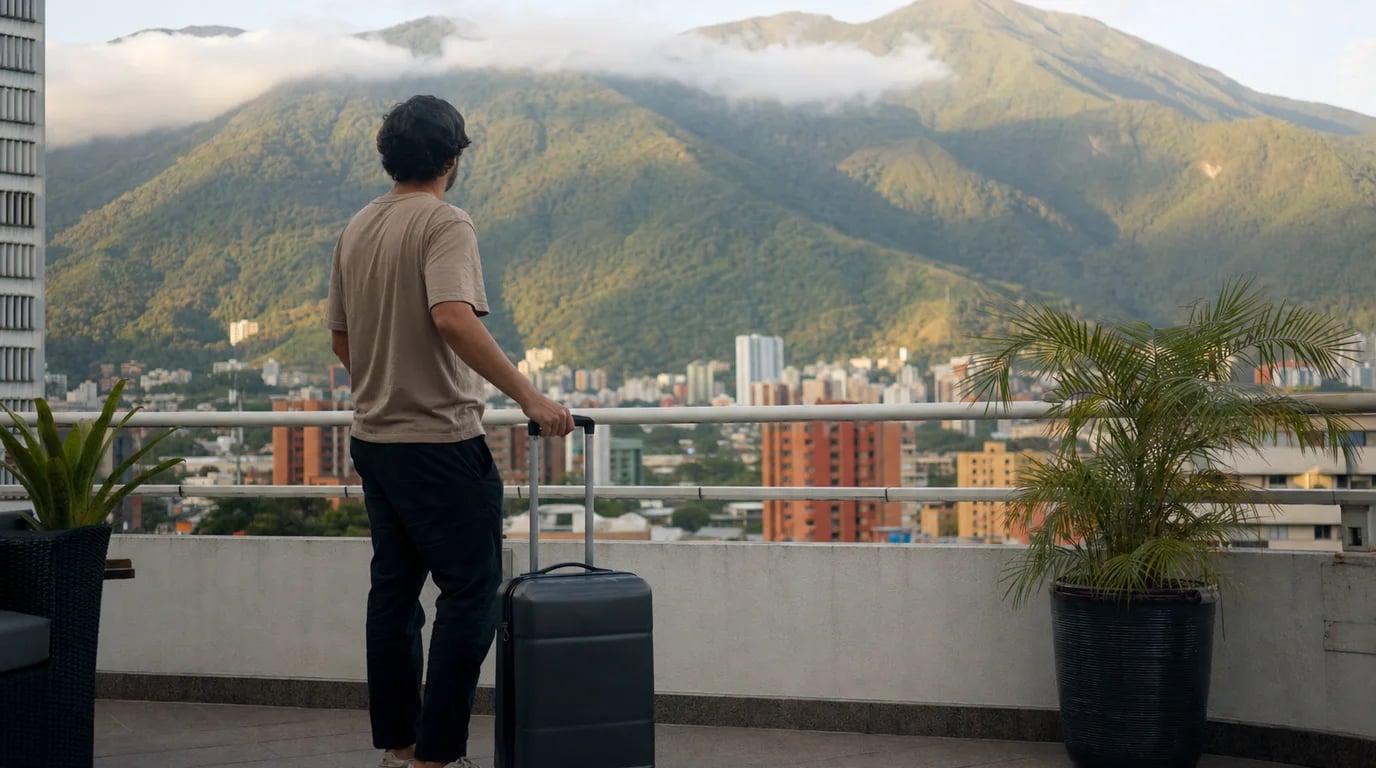
Moving back to Venezuela in 2026: how much you need a month and where to settle
By HabitaOne Team
If you're thinking about moving back to Venezuela in 2026, you've probably already run the search at one in the morning, from Miami, Bogotá, Santiago or Madrid, and hit the same wall: one Reddit thread, two opposing opinions, and nothing that reads like an answer. That's no accident. The question that keeps you up isn't "how is the country doing?" It's the concrete one: how much do I need a month, which city makes sense for me, and how do I buy without coming in blind. Nobody in the industry sat down to answer that.
This guide does. Not to talk you into coming back or staying; that's your call, and your family's. It's so you make it with real numbers and a plan instead of a forum thread and nostalgia working against you.
the question only reddit answers
Try it. Search "moving back to venezuela from usa" or "living in caracas reddit" and you'll find generous people sharing their experience, plus the deeper problem: everyone answers from their own case. The person who went back to a neighborhood in eastern Caracas and the one who moved into a family house in San Cristóbal live in two different countries when it comes to money, and both are right. Neither can tell you how much you'll spend, because they don't know where you'll land or what income you're bringing.
No real estate site ever answered it either. There are news pieces with one big national number and threads full of scattered anecdotes, but nobody crosses the two things that matter: what it actually costs to live, city by city, against the inventory that exists today. What follows is that crossing, built from the active listings in our own database, not a borrowed average from somewhere else.
The question isn't "how is Venezuela doing?". It's "how much do I need, where do I land, and how do I buy?". That one nobody has answered for you yet.
how much you need a month (it depends on the city)
There's no such thing as "the cost of living in Venezuela." There's the cost in your city, and the heaviest brick in that budget is the roof over your head. Food, utilities, internet and transport move within a similar band across most of the country. Rent doesn't. Rent multiplies.
Here's the median rent for an apartment, based on HabitaOne listings, from priciest to cheapest: Caracas runs around 1,200 dollars a month, Maracaibo 600, Valencia 500, Maturín 250. Between the capital and a mid-sized city in the interior there's almost five to one for an equivalent roof. The money that goes entirely to rent in Caracas covers the roof in the interior and still leaves you room to breathe.

So when someone who earns or saved in dollars decides to move back, the first call isn't about the country. It's about the city. The same income that barely stretches in Caracas changes the monthly math completely in Valencia, Barquisimeto or Maturín.
Anchor the budget on rent, not on a magic total
Before chasing a number for "how much do I need a month," pick the city and find out its median rent. That's the biggest, most fixed line, and the rest settles around it. To build the full budget, with the utilities detail and the air-conditioning gotcha on the coast, see our guide on how much it costs to live in Venezuela in dollars.
where the inventory really is
Picking a city by your wallet is half the story. The other half is where there's actually something to choose from, because inventory isn't spread evenly either. Right now there are around 35,449 active properties in our database, and they cluster: Caracas holds the largest pool, then Maracaibo and Valencia. There you'll find real variety in areas, prices and types. In smaller cities the supply exists, but it's thin, and that weighs on your decision as much as the price does.

So when you move back, weigh both the city's median rent and how much real supply it has. And you won't settle that by picturing a map from memory. Filter by city and price range in the listings for sale and you'll see, in minutes, whether your dream area has ten options or two. How much inventory there is where you want to land is worth as much as the price, and it keeps you from idealizing a move from a distance.
buying from abroad: power of attorney and apostille without traveling
One of the things that holds returners back most is believing they have to land before they can buy. They don't. Buying a home in Venezuela from abroad is a familiar transaction once you understand two pieces: how you sign without being there, and when, exactly, you become the owner.
Nota legal
This section is informational and not legal advice. The steps, costs and timelines vary by case; it's best to confirm the procedure with a Venezuelan lawyer you trust before closing anything.
You don't need to travel to sign. You can grant a power of attorney to a trusted agent who signs on your behalf. The power of attorney is an act executed before a notary, and under the usual consular procedure a power granted abroad is apostilled or executed before the Venezuelan consulate so it holds in Venezuela. Because Venezuela is a party to the 1961 Apostille Convention, that seal authenticates the signature and gives it effect in the country with no further legalizations. Three things to watch: the power of attorney has to say plainly that your agent can buy, sign and handle funds; it has to go to someone you genuinely trust; and a local lawyer has to do all the verification, because you won't be there to catch a red flag in time.

The second piece is the one that saves the most money. Under the usual procedure, you're the owner, enforceable against third parties, when the sale is recorded at the Public Registry, not when you put down a deposit or when you pay. The notary attests to the signatures; the registrar is the one who records you as the owner. Don't release the final balance until the recording is ready to happen in the same act. The Venezuelan market is cash and in dollars, with no bank escrow, so your lawyer coordinates the fit between payment and signing, and that's the most delicate point of the whole transaction. The full step by step, with the documents you have to demand, is in the guide on buying property in dollars from Venezuela.
the landing plan
City decided, budget built, the mechanics of the purchase clear. What's left is what almost nobody tells you: the first days in the place. Coming back doesn't end when you sign. That's where it begins.

Start with three fronts. First, the utilities: confirm the property's accounts are current (building fees, frontage tax, trash) and put what's needed in your name, because a debt inherited from the previous owner can complicate things. Second, and this is very Venezuelan, check water and power before you really settle in. A building without a tank and pump that can ride out the outages, or an area where the power drops often and there's no generator or inverter, changes your daily life more than the price does. Check what to look at for water and power before you move or buy while you're still choosing, not after.
Third, leave some margin. People coming back underestimate the start-up costs: deposits, the AC unit on the hot coast, the inverter where power fails, the fixes on a place that sat closed for a good while. None of them is ruinous on its own, but together they add up, so plan the first three months with a cushion, not down to the cent.
Moving back to Venezuela in 2026 is a big decision, and it gets more manageable broken into pieces like these. A forum thread answers none of them. You answer them with real numbers and a plan, which is exactly what you came looking for at one in the morning.
Fuentes
- SAREN — Servicio Autónomo de Registros y Notarías —
Granting a power of attorney is an act authenticated before a Public Notary: the official page expressly lists "powers of attorney, substitutions, waivers and revocations."
- SAREN — Servicio Autónomo de Registros y Notarías —
The Public Registry handles the recording and registration of acts relating to ownership and other property rights over real estate.
- Conferencia de La Haya (HCCH) —
Venezuela is a State party to the 1961 Apostille Convention (in force since 1999), so a document apostilled in another member State is recognized in Venezuela.